Read Communication Disorders In Schools: Collaborative Scenarios Online
Scary power. Very flexible. All visual.
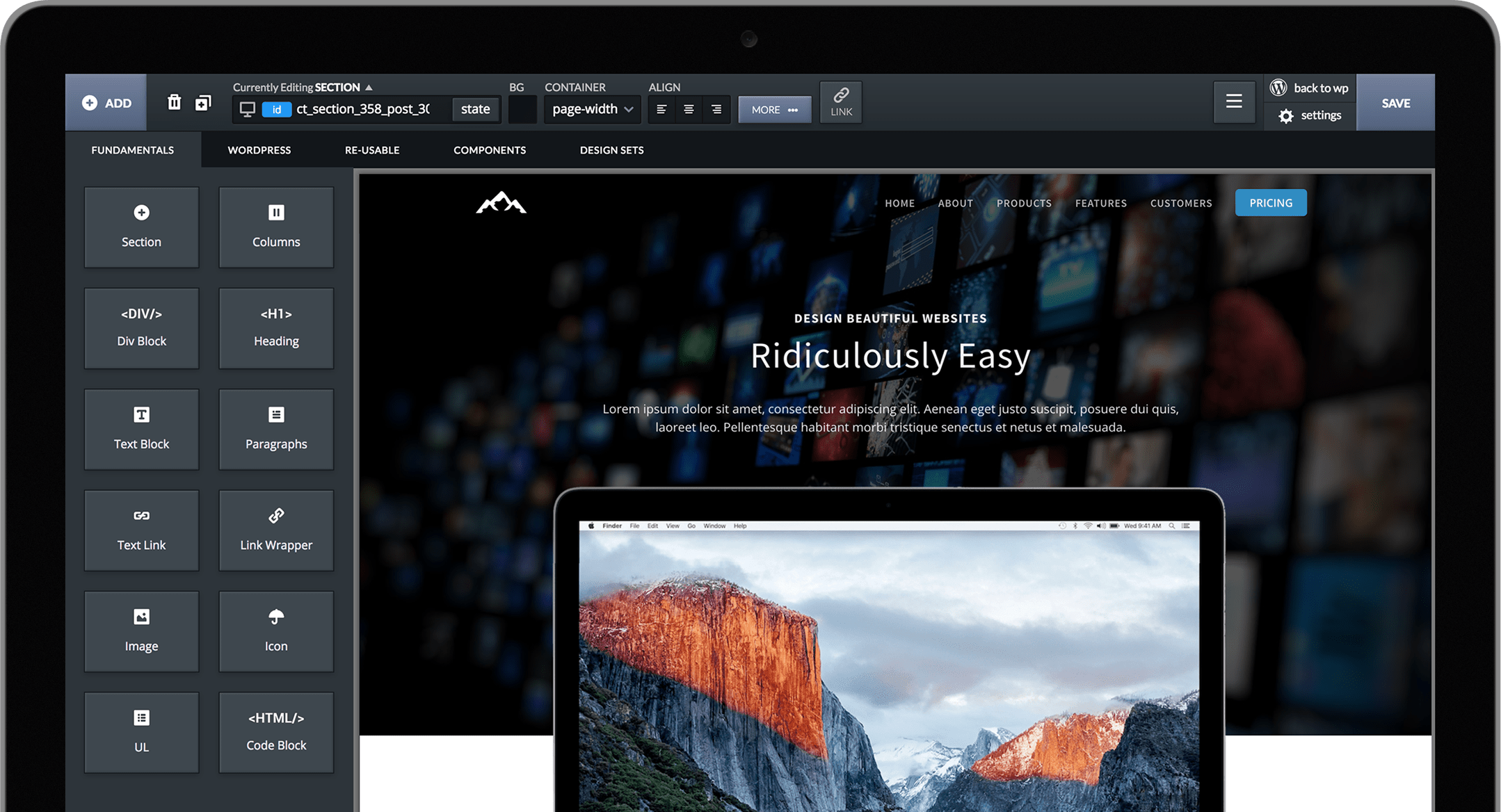
Rapidly create pixel-perfect, responsive designs.
Build from fundamental HTML elements and visually edit CSS properties for down-to-the-pixel control.
Never touch a theme file again.
Sick of tweaking theme files? So are we. Insert and customize plugin output, write JavaScript and PHP, run custom WP loops, and call WP API functions right inside Oxygen.
See your changes live.
Your entire workflow takes place inside WordPress. Say goodbye to the endless cycle of editing, uploading, and refreshing. Preview your design as you create it, on any content.
Read Communication Disorders In Schools: Collaborative Scenarios Online
The primary argument for collaborative models rests on the concept of generalization . A student may demonstrate perfect articulation of the /r/ sound in the quiet, predictable environment of the SLP’s office. However, that same student, when called upon to read aloud in a noisy science class while anxious about peer judgment, will likely regress. Online case scenarios, such as those provided by the American Speech-Language-Hearing Association (ASHA) or university training programs, vividly illustrate this disconnect. One common scenario involves a middle schooler with a language processing disorder who can define vocabulary words in a one-on-one test but cannot follow multi-step directions in a social studies lecture. In a traditional model, the SLP marks “progress.” In a collaborative scenario, the SLP co-teaches a lesson with the social studies teacher, embedding visual supports, chunked instructions, and paraphrase checks into the natural flow of the lesson. Here, the communication goal is not an isolated task but a functional tool for accessing grade-level content.
To improve student outcomes by generalizing communication skills across settings (classroom, playground, home) rather than isolating therapy in a separate room. Online case scenarios, such as those provided by
Texts on this topic often discuss why collaboration is difficult to implement:
Here are three typical scenarios you will encounter in online texts on this topic. They illustrate how collaboration solves specific problems.
"The limited customization options of typical themes has always annoyed me. With Oxygen, I can finally build whatever I want in a visual environment. My imagination is the only limit."
Sofia Ferreira Simões
Founder @ Bind Agency
Read Communication Disorders In Schools: Collaborative Scenarios Online