
Darwin is the open source operating system from Apple that forms the base for macOS. PureDarwin is a community project that fills in the gaps to make Darwin usable.
The PureDarwin project, which aims to make Apple's open-source Darwin OS more usable, is still actively maintained as of 2024. While development has been relatively slow, the project continues to progress through community contributions. PureDarwin focuses on creating a usable bootable system that is independent of macOS components, relying solely on Darwin and other open-source tools.
The project's main focus is providing useful documentation and making it easier for developers and open-source enthusiasts to engage with Darwin.
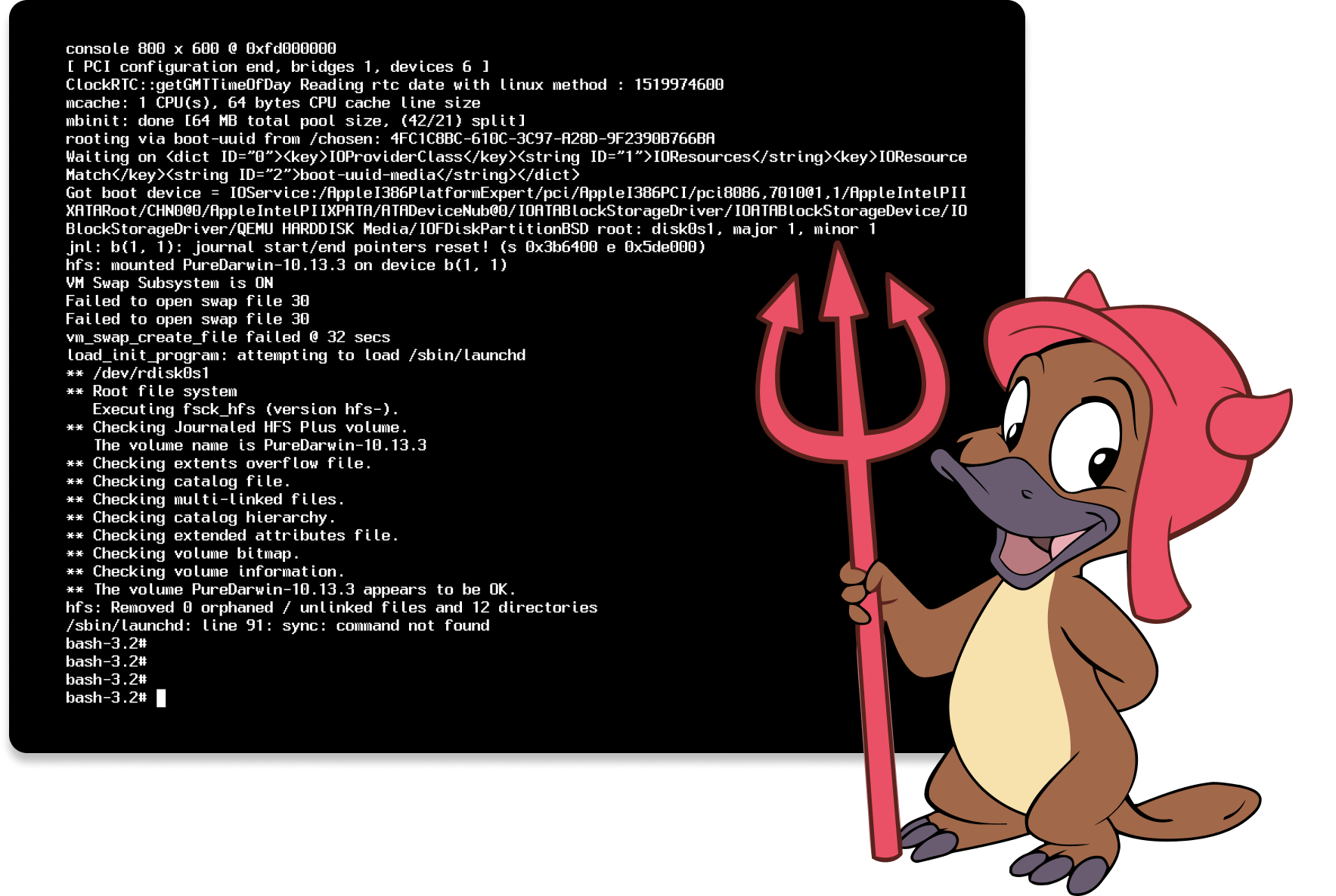
The PD-17.4 Test Build is a minimal system, unlike previous versions like PureDarwin Xmas with a graphical
interface. It’s distributed as a virtual machine disk (VMDK) and runs via software like QEMU.
Due to the lack of proprietary macOS components, the community must develop alternatives, leaving
elements like
network drivers and hardware support incomplete. This build is intended for developers and open-source
enthusiasts to explore Darwin development outside of macOS.
Based on Darwin 17, which corresponds to macOS High Sierra (10.13.x).
: This method is particularly effective for "repacks" where the same textures, sounds, or engine files are repeated across multiple game levels or versions. Common Syntax and Use Cases
is a specialized fork or variant of the standard dd command (often associated with the XWiki ecosystem or used as a high-performance data migration tool) designed specifically to handle data stream deduplication during the copy process. xtool -dd deduplication
The primary goal of the -dd (or --dedup ) flag is to identify and remove redundant data streams within a file or folder before it is handed off to a final compressor like 7-Zip or Zstd, which significantly reduces the final file size . : This method is particularly effective for "repacks"
In the context of data management, is the process of identifying and removing redundant copies of data to save space. While standard compression (like ZIP or RAR) looks for patterns within a single file or small window, XTool’s deduplication operates across the entire data stream to find identical blocks of data that can be replaced with references. How Deduplication Works in XTool In the context of data management, is the